This blog is an English adaptation of an article originally published by Swedish business newspaper Dagens Industri, as part of its series profiling Sweden’s future leaders.
Artificial intelligence (AI) is rapidly changing how companies operate, compete, and make decisions. But according to Jonas Lundin, companies that underestimate the pace of change risk being left behind.
Jonas is currently VP Business Control and Strategic Planning at Securitas. On 1 September 2026, he will take on a new role as SVP Strategy and Transformation.
In his interview with Dagens Industri, Jonas explained that while the full potential of AI remains uncertain, companies cannot afford to wait until all the answers are available before taking action.
"In the worst case, it will be a black swan – you don't see it coming until it's too late," he says.
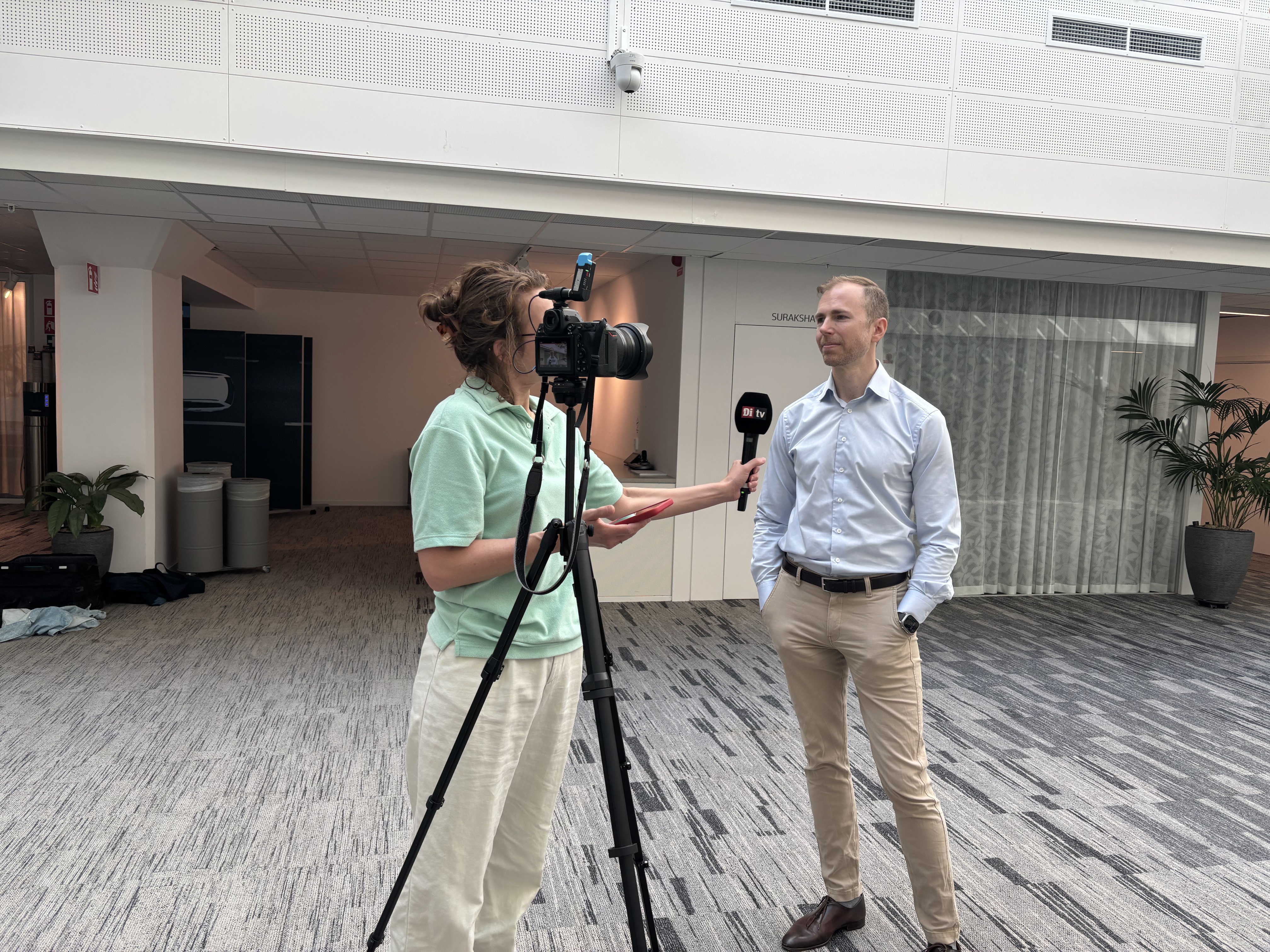
Jonas Lundin being interviewed by Dagens industri.
The AI generation gap
Jonas highlights a growing source of tension around AI: the capability gap between generations. For many younger employees, the technology is quickly becoming embedded in how they learn, work, and solve complex problems. Others have had far less exposure to it.
Jonas believes this divide could cause significant disruption.
"The gap between different generations' AI habits can lead to small, agile companies running up to and overtaking established companies," he explains.
"AI is a native language for young people and a foreign language for many older people, which means that important business decisions are made in a knowledge vacuum – what systems to buy, what investments and acquisitions need to be made."
Outsourcing isn’t the answer
The rapid growth of AI has created a crowded market of external providers promising to solve companies’ challenges for them. Jonas cautions against treating AI as something that can simply be handed over to someone else to switch on for you.
External expertise can help, but it can’t replace a company’s own understanding of its clients, operations, and employees. Without that foundation, organizations can spend significant time and money without addressing the questions that matter most.
“It's often a waste of both time and money," explains Jonas.
The elevated importance of leadership
For Jonas, these challenges make effective leadership more important than ever. Leaders don’t need to be AI experts, but they do need enough understanding to ask the right questions, set clear priorities, and make informed decisions.
Drawing on his experience across seven industries, Jonas points to accountability, clarity, and a willingness to address conflict as key leadership qualities.
“Accountability is the foundation,” he states.
Jonas also advises leaders to have clear priorities and focus efforts on achieving them rather than trying to respond to everything at once.
Read the full interview with Jonas in Dagens Industri, written by reporter Johanna Saldert. Please note this original article is in Swedish.